The Problem / Context
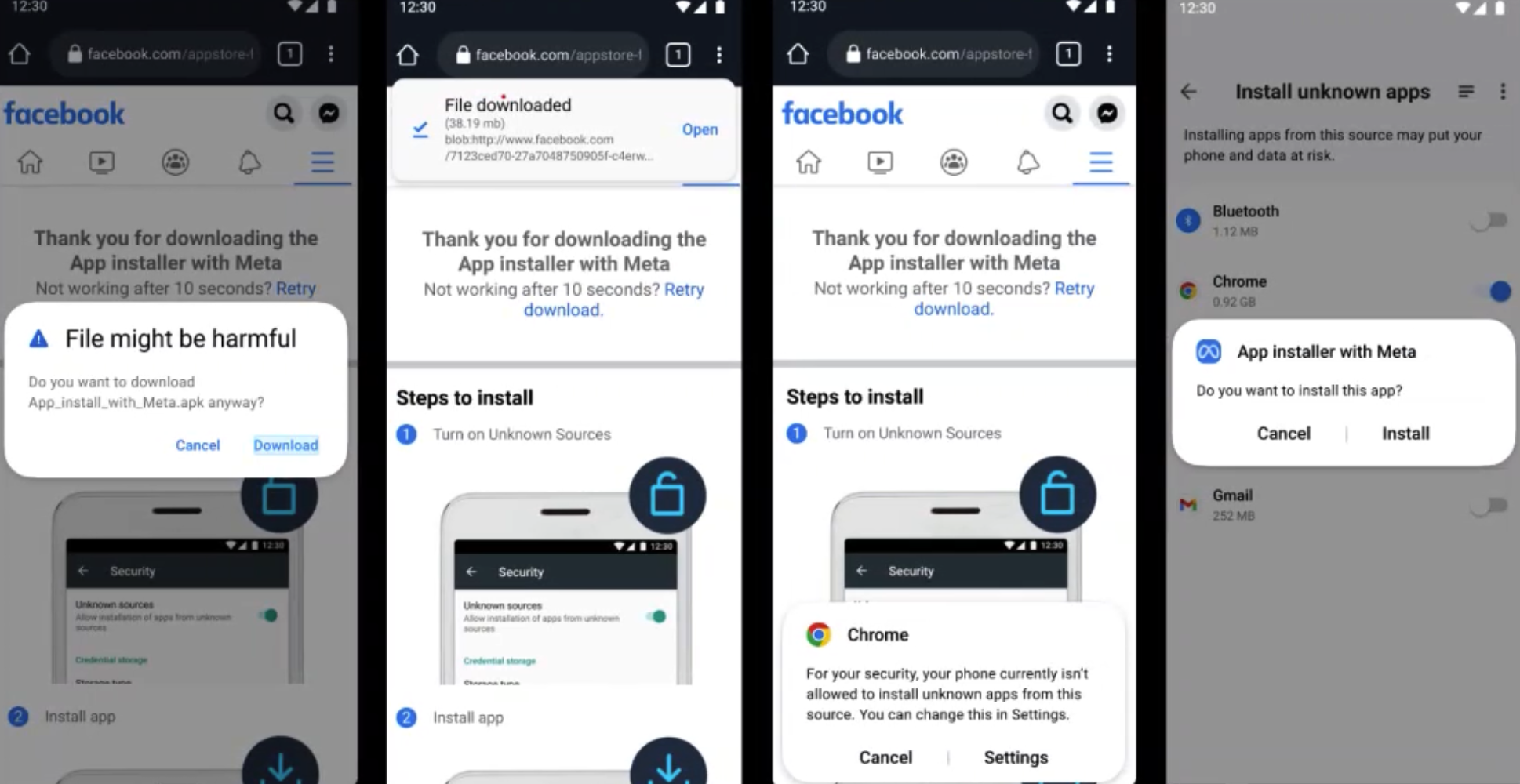
The EU's Digital Markets Act was coming into force, with the potential to reshape how apps could be distributed on mobile devices. At the time, downloading an app from any source other than the Apple App Store or Google Play Store was, depending on the platform and market, either blocked outright, permitted but accompanied by alarming warnings designed to deter users, or quietly reversed after the fact, with apps deleted without notification. Across all of these approaches, what was consistent was a lack of transparency: users were not clearly informed of their rights, and were not given genuine agency to decide for themselves whether they trusted a given source. Meta's internal app ads teams were exploring whether Meta could build its own app installer, which would open a significant new revenue channel. But doing so would require regulators to interpret the DMA in a way that permitted genuine competition in app distribution, and that required independent evidence.
My Role
I led this project end-to-end as Meta's internal research lead, operating entirely outside product teams and reporting directly into VP and senior leadership. I identified the opportunity to commission independent external research as a deliberate neutrality strategy, recognising that findings produced internally at Meta would carry limited weight with regulators. I scoped the project, made the case to senior leadership for the approach, selected and contracted Ipsos as the external research partner, brought on a quant researcher to validate the mixed-methods design, and worked with a product designer and content designer to build the prototypes tested in the study.
I served as the de facto project manager across a wide stakeholder landscape: directing Ipsos's research leads and qualitative moderators across English, French, and German interviews; aligning VP of Research and VP of Design in my own org; coordinating with legal and policy leads focused on the DMA; and liaising with directors across three or four other Meta orgs doing parallel regulatory work to ensure our findings and recommendations were coherent and non-contradictory. I also proposed and drove the decision to publish a public-facing white paper, a strategy to establish the research as a legitimate, neutral contribution to the broader regulatory conversation rather than an internal Meta document.
Methodology
Mixed methods study conducted by Ipsos across the US, UK, France, and Germany, against a hard deadline set by the DMA's implementation timeline. The study combined a quantitative survey experiment (800+ adults per market) with 48 qualitative in-depth interviews, testing both high-friction and low-friction app installer prototype experiences to understand consumer awareness, trust, security perceptions, and usability expectations around alternative app distribution.
Key Findings
Awareness of alternatives to Google Play and the Apple App Store was extremely low, with 86% of EU respondents not knowing it was possible to download an app from another source. Users valued security but were actively deterred by excessive or alarming security warnings, which increased anxiety and download abandonment without meaningfully improving perceived safety. Low-friction experiences informed users just as well as high-friction ones. Brand recognition was a critical trust signal, with users significantly more open to installers from established companies. Regional differences existed in how users balanced speed against transparency, with implications for how regulators in different markets should approach implementation.
What I Delivered
A full mixed-methods research program and published white paper, delivered under regulatory deadline. Internally, I created multiple layers of deliverables tailored to different audiences: broad findings presentations for senior leadership and legal and policy teams preparing for European Commission meetings; specific data inserts and slides contributed to documents exchanged directly with the Commission; and briefing materials for VP and director-level stakeholders across Meta's regulatory workstreams. The white paper was published by Ipsos as an independent document, deliberately designed to position the research as a neutral contribution to the regulatory debate rather than advocacy material.
Outcomes / Impact
The research was used directly in Meta's engagement with the European Commission and in regulatory discussions in the UK and US, with plans to extend to further markets. Apple and Android devices in the EU, Brazil, and Japan now support alternative app distribution, with users able to install apps from verified third-party sources by adjusting settings, a significant shift from the previous landscape of blocking, alarming warnings, and silent deletions. While the DMA's direction reflected the EU's broader market-opening agenda, the research contributed evidence on consumer readiness, security expectations, and usability requirements that informed how implementation was approached.
Perhaps the most unexpected outcome was a partnership with Google. Recognising that Meta developing its own independent app installer posed a competitive risk, Google approached Meta to propose a collaborative app installation format for ads on Facebook and Instagram, sharing revenue rather than competing. Research that began as a strategy to open a new market ultimately contributed to a cross-industry partnership between two of the world's largest technology companies.